
|
| Home |  |
|
Tips 'n Info Nail Trimming for Alpacas & Llamas By Cathy Spalding Just like humans, the nails of alpacas and llamas have varying qualities of strength and hardiness. The nails of some animals will grow fast and exceptionally long while others will rarely need trimming. Some animals have nails that will crack, split or break off. For others, the nails will remain strong—even when curling back around themselves—and still never break off. While nutrition can certainly play a role in the health of the nails, genetics can also play a part. These best time of year to trim toenails is often Spring. Most alpacas and llamas have spent some time walking in wet pastures and paddocks, puddles and even muddy areas. The nails have absorbed some moisture making them softer and more pliable. Trimming toenails can be a more difficult task after a spell of hot, dry weather as the nails can dry out and become hard. Some folks have found that pouring rough concrete in feeding areas or having concrete floors in barns and shelters will keep the nails worn down to a reasonable level. Others have felt that gravel walkways have had an impact on keeping the nails shorter. The difficulty with gravel or pebble walkways is that alpacas and llamas seem to feel it a fine area to eliminate making clean-up a more difficult task. The small stones can also become lodged between the toes causing bruising and lameness. Some have secured large pieces of plywood around the feeding areas and covered the wood with a rough material. While paving brick and patio tile is attractive, there is a tendency for those to shift under constant weight and movement. An alpaca or llama can break a foot or toe if it should become caught between the bricks.
But what about those incredibly hard nails—the ones that take all your strength using both hands tomake just a small indentation on the nail?
Sharp and precise, they have been known to make quick work of those very hard and tough nails. Don’t forget that no matter what tool works best for you that the sharp edges will become dull with use. The pruners are inexpensive enough that financially, it is often cheaper to simply purchase a new pair. Horse nippers and others can be taken in to your local feed store and sent out for sharpening service. Often a local tool shop can sharpen them for you while you wait. Folks have successfully sharpened them by using their Dremel’s sharpening drum. Others have used the Fiskars sharpener. While no alpaca or llama has ever passed due to overgrown toenails, keeping them trimmed is an important part of health management. Overgrown nails can affect natural movement causing an animal to walk differently to compensate for change in the form and balance of their foot. Over time, walking on overgrown nails that do not allow the pad of the foot to properly connect with the ground can cause muscle and skeletal shifts.
|
 |
©™ 2013 Cathy Spalding Gentle Spirit Llamas |
Customer Service Privacy Policy |
Terms
and Conditions |
Contact Webmaster Craig Spalding |
 |

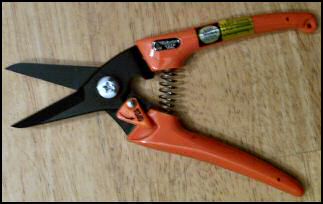 The most popular nail-trimming tool is actually a garden pruner. Smaller in size, sharp and easy to handle, it can make quick work of overgrown nails. A number of camelid vendors keep them in stock.
 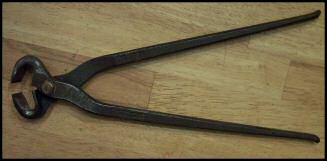 Hoof nippers can work well. They come in several sizes and it is important that you try them out and discover what size you can most easily handle with one hand.
 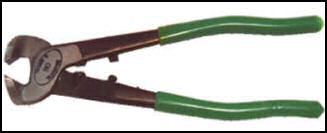 Believe it or not, another popular tool is a tile nipper.