
Discover the Gentle World
of Llamas and Alpacas

Bobkat’s Mulligan Stew
A library left to share. Look around. Take what helps.

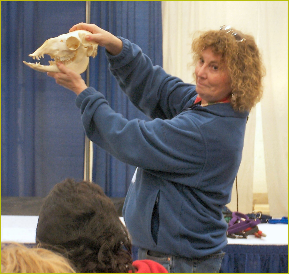
For nearly 40 years, Cathy Spalding raised, cared for, and trained llamas and alpacas — and wrote about the many things she learned.

She recorded the first alpaca vocalizations ever published on the web. Cathy traveled across North America, to Europe and New Zealand speaking, teaching and conducting clinics. Chairing numerous conferences, Cathy served on the board of directors of the International Llama Association and served as president of the Lama Association of North America and the Llama Association of Washington State (LOWS) and was publisher of the LOWS newsletter.

Cathy spoke at veterinary schools and published the first alpaca and llama behavioral books on CD, Alpaca Talk and Llama Talk. Both CDs are still available by directly contacting Cathy.

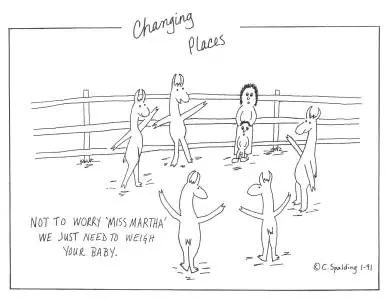
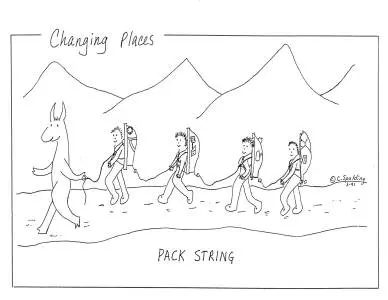
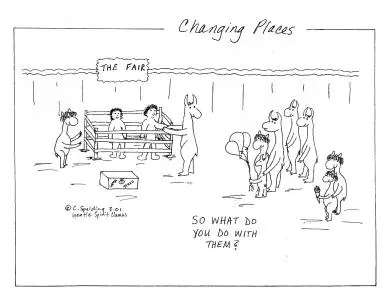
She is the creator of the wise and witty anthropomorphic cartoon, Changing Places. A notecard set of the Changing Places cartoons is available by contacting Cathy directly.

The articles, training guidance, recorded vocalizations, and camelid collections here are hers. Now retired, they are offered freely to today’s community: owners, 4-H clubs, local shows, fiber enthusiasts, and organizations like LANA who share her love of these remarkable animals.

Understanding behavior is the key. It always has been.
Educational Articles & Resources

Positioning: The 3.5 Positions

A must-know foundation for optimum training success with alpacas and llamas. Learn how positioning influences behavior and builds trust.

Ear Fear & Behavioral Responses

Spitting may seem aggressive, but it’s part of the normal behavioral range. Understand what triggers it and how to respond appropriately.

Hearing Our Herd

Herd dynamics are intricate and ever-changing. Discover how llamas and alpacas communicate within their social structures.

Heat Stress in Camelids

A universal concern for llama and alpaca owners. Learn the signs, prevention strategies, and emergency care protocols.

Changing Places Greeting Cards

Original Designs By Cathy

In early 1990, it struck me how alpacas and llamas might view humans. In “Changing Places” with them, I had to laugh at myself. I began drawing cartoons and have received continual requests ever since. They have appeared in books, on t-shirts, sweatshirts and as note cards. Changing Places are back as greeting cards printed on high quality gloss paper. I appreciate how much fun they are and am excited to offer them once again.

  • Changing Places greeting cards contain 8 greeting cards and envelopes.
  • Cards measure 5 1/2″ by 4 1/4″ (size A2).
  • Printed on high quality 12pt single-side coated glossy paper.
  • The inside is blank giving you plenty of room for writing your sentiment.
  • Envelopes are heavy, white 70# vellum.
  • Packaged in a view top stationary box with a transparent lid and gold embossed base.
Here’s what’s in the set:

“What if llamas and alpacas could see things from our side? That question inspired Cathy Spalding to pick up a pen in 1990 and start drawing cartoons. Those original drawings became a beloved series that appeared in books, on t-shirts and sweatshirts, and as note cards over the decades. Changing Places greeting cards feature Cathy’s original cartoon illustrations, turning everyday camelid life into gentle, knowing humor that anyone in the llama and alpaca world will instantly recognize. Sets include 8 cards, one of each illustration, and envelopes, printed on high quality gloss paper with blank interiors for your own message, and packaged in a handsome keepsake box. Once people discover them, they keep asking for more — just as they have for over thirty years. Greeting cards can be purchased for $10 plus shipping. 

Understanding Alpaca Behavior

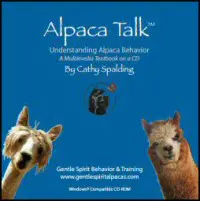
Alpacas communicate constantly — with their ears, their posture, their sounds, and their eyes. Alpaca Talk teaches you how to listen. Written by Cathy Spalding with nearly 40 years of direct experience, this illustrated behavioral guide is designed to be used in the field: print the chapters, put them in a binder, and take them to your pasture. The photos, text, and recorded vocalizations work together to give you a real understanding of what your animals are doing and why. An essential resource for owners, 4-H members, and anyone working with alpacas. The CD is Windows® Compatible and available for purchase, $10.00 plus shipping. More details and purchasing information go here.
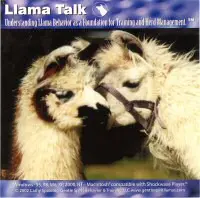
Llama Talk: Understanding Llama Behavior

If you've ever wished you could understand exactly what your llama is telling you, Llama Talk was written for you. Cathy Spalding spent decades observing, training, and caring for llamas before putting it all into this richly illustrated guide — 44 chapters, more than 100 color photos of behavioral cues, and recorded llama vocalizations that bring the text to life. Hailed as "groundbreaking,” it is part of the reference libraries at Cornell University School of Veterinary Medicine as well as the University of Uruguay Veterinary School. Whether you're new to llamas or have shared your life with them for years, this is the resource serious owners reach for first. The CD is Windows® and Mac Compatible and available for purchase, $10.00 plus shipping. More details and purchasing information go here.

Hear Alpaca Sounds

Recorded Vocalizations

What sounds
Do Alpacas make?

Alpacas communicate through a rich variety of vocalizations. From hums to alarm calls, each sound carries meaning.

Listen to recorded alpaca vocalizations and learn what they’re telling you.

Who is
Cathy Spalding

Cathy Spalding has dedicated nearly 40 years to understanding camelid behavior. Her work bridges the communication gap between humans and their animals through observation, training, and education.

Explore at Your Own Pace

Whether you’re seeking answers to specific behavioral challenges or building foundational knowledge, Gentle Spirit Llamas offers the resources you need.
Explore our articles. Listen to alpaca vocalizations. Invest in proven educational tools.


Understanding behavior is key.